Great Smoky Mountains: Then and Now
The Great Smoky Mountains (often called the Smokies) straddle the Tennessee-North Carolina border and form part of the ancient Appalachian range. These mountains have transformed dramatically over the past century from a heavily logged and settled frontier to America’s most visited national park, preserved for its biodiversity and natural beauty.
Then: Early 20th Century (1920s–1930s)
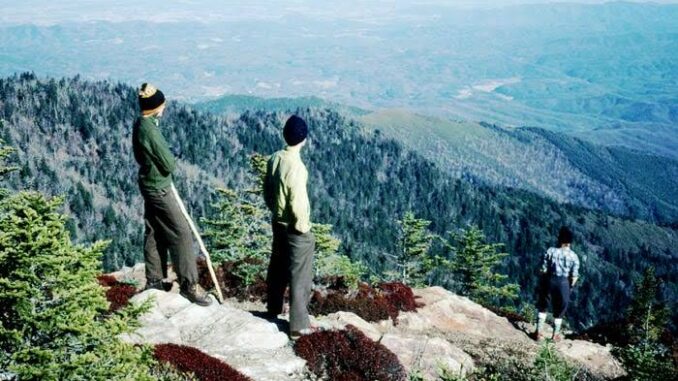
In the early 1900s, the area featured small mountain communities, farms, and extensive logging operations. European-American settlers and Cherokee descendants lived in valleys, while companies clear-cut vast forests for timber. Cabins, mills, and churches dotted the landscape, but deforestation threatened the ecosystem. Historic photos capture daily life among residents and the impacts of logging’s
Efforts to establish a national park began in the 1920s, driven by conservationists like Ann Davis and funded partly by John D. Rockefeller Jr. The park was chartered in 1934 and dedicated in 1940. Air quality suffered from pollution, reducing visibility on many days.[render_searched_image]
Now: 2020s and Today
Great Smoky Mountains National Park spans over 522,000 acres and attracts over 12–14 million visitors annually—more than any other U.S. national park. Old-growth forests have regenerated, creating lush, misty vistas famous for their “smoke” (natural fog from vegetation). The park boasts incredible biodiversity, including dense black bear populations and diverse salamanders. Historic structures remain preserved in places like Cades Cove, but the focus is on trails, wildlife, and scenic views.
Key changes include:
Forest recovery — Much of the land has rewilded since logging ended.
Improved air quality — Visibility has increased, though challenges persist.
Tourism boom — Free entry (with parking fees) draws massive crowds to spots like Clingmans Dome (now officially Kuwohi).
The Smokies have shifted from a working rural landscape to a protected natural treasure, highlighting successful conservation.
Leave a Reply